Larry Hite is one of the most influential figures in systematic trading and trend following. Rather than trying to predict where the market would go next, Hite built his approach around a simpler question:
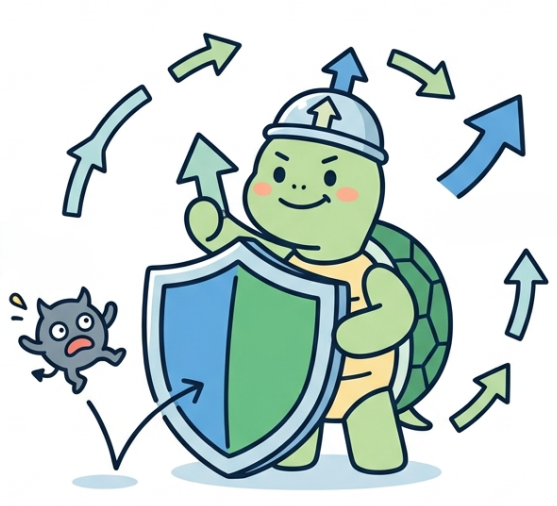
How much can I afford to lose if I am wrong?
His philosophy combined trend following, position sizing, diversification, and strict risk control. As a co-founder of Mint Investment Management, Hite helped demonstrate that systematic trading could be applied across futures, currencies, commodities, interest rates, and other markets.
His story later became widely known through Jack Schwager's Market Wizards, where Hite's disciplined approach to trading and money management attracted considerable attention.
Who Was Larry Hite?
Larry Hite was born in the United States in 1941. He faced significant learning difficulties as a child, and accounts of his life have frequently discussed his experience with dyslexia.
Before entering finance, Hite worked in a variety of jobs, including photography, acting, and bartending. He eventually entered the securities business and began studying how financial markets behaved.
What interested Hite was not simply finding the perfect market prediction. Instead, he became increasingly interested in probability, patterns, and rules that could be applied consistently without relying on emotion.
In 1981, Hite co-founded Mint Investment Management. The firm became an important name in the managed futures industry and was recognized for applying systematic trend-following strategies across multiple markets.
This experience established Hite as one of the better-known pioneers of systematic trading.
Larry Hite's Core Trading Philosophy
Hite's approach can be summarized through four major principles.
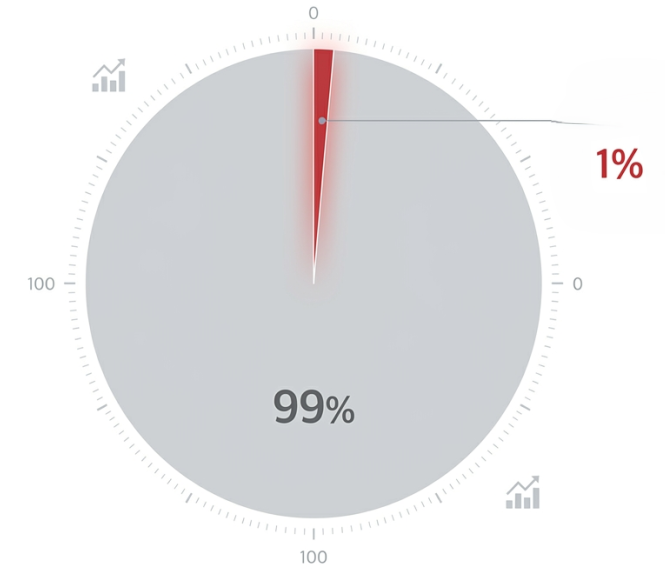
1. Risk No More Than 1% on a Trade

Perhaps the most famous idea associated with Larry Hite is the 1% risk rule.
The basic concept is straightforward: a single trade should not expose the overall account to a potentially devastating loss.
For example, if an account contains $100,000 and the trader decides to risk no more than 1%, the maximum planned loss on that trade would be $1,000.
The important point is that the 1% figure is not simply a stop-loss percentage. Position size must be adjusted according to the distance between the entry price and the stop-loss price.
Suppose a trader is willing to lose $1,000 and places a stop $5 below the entry price. The position size would be calculated around that predefined risk rather than simply buying a fixed number of shares.
This approach is known as position sizing and is one of the foundations of professional risk management.
The exact percentage used by an individual trader can vary depending on strategy, volatility, leverage, and portfolio structure. The broader lesson is to prevent a single mistake from becoming a catastrophic loss.
2. Follow Trends Instead of Predicting the Market
Hite's philosophy was closely associated with trend following.
Instead of trying to identify the exact bottom before a rally or the exact top before a decline, a trend follower waits for evidence that a meaningful price movement is already underway.
The basic process is:
Identify a trend → enter according to predefined rules → stay with the trend → exit when the trend weakens or reverses.
A trend-following strategy does not need to win every trade.
It may experience several small losses while waiting for a major trend. The objective is to keep losses controlled while allowing profitable positions to continue running.
A simple educational example would be a system that buys when price breaks above a 20-day high and exits or reverses when price falls below a 20-day low.
This is only an illustration. Real-world systematic strategies may use volatility measures, moving averages, breakout filters, portfolio constraints, transaction costs, and other rules.
3. Diversify Across Markets
Another important element of Hite's approach was diversification.
Rather than concentrating on a single stock market, a systematic trend-following program can trade a wide range of markets, including:
- Equity indexes
- Government bonds and interest rates
- Currencies
- Energy commodities
- Precious metals
- Agricultural commodities
The reason is simple: different markets do not always trend at the same time.
When one market is moving sideways, another may be experiencing a powerful trend. A diversified portfolio can therefore reduce dependence on the outcome of any single market.
This idea remains important in modern managed futures and quantitative trading.
4. Remove Emotion Through Rules
Fear and greed are among the biggest obstacles to consistent trading.
A trader may decide to hold a losing position because they believe it will recover. Another may take a small profit too quickly because they are afraid of giving it back.
Systematic trading attempts to reduce these emotional decisions by establishing rules before the trade occurs.
A typical process might look like this:
| 1 | Identify the trend | Use objective market data |
| 2 | Enter | Follow predefined conditions |
| 3 | Determine risk | Limit potential account damage |
| 4 | Manage the position | Allow profitable trends to develop |
| 5 | Exit | Close when the system signals that the trend has ended |
The goal is not to eliminate uncertainty. It is to make uncertainty manageable.
Larry Hite vs. Emotional Trading
The difference between systematic trading and discretionary, emotion-driven trading can be summarized as follows:
| Category | Systematic Approach | Emotional Approach |
| Market direction | Respond to price behavior | Try to predict tops and bottoms |
| Risk | Defined before entering | Often decided after losses appear |
| Position size | Based on risk | Often based on conviction |
| Profits | Allow strong trends to continue | Frequently take profits too early |
| Decisions | Rules and data | News, rumors, fear, and greed |
This distinction explains why Hite placed so much emphasis on discipline.
A trading system does not have to predict every market move. It needs to provide a repeatable framework for dealing with both winning and losing trades.
Why Risk Management Matters More Than Most Traders Think
The mathematics of losses explains why professional traders are so concerned about downside risk.
| Account Loss | Return Needed to Recover |
| 1% | 1.01% |
| 10% | 11.1% |
| 30% | 42.9% |
| 50% | 100% |
| 90% | 900% |
A 50% loss requires a 100% gain just to return to the starting point.
A 90% loss requires a staggering 900% gain.
This is why capital preservation is not simply a defensive concept—it is a prerequisite for long-term compounding.
The smaller the drawdown, the less difficult it is to recover.
Larry Hite and the 1987 Black Monday Crash
On October 19, 1987, the Dow Jones Industrial Average plunged approximately 22.6% in a single trading session. The event became known as Black Monday and remains one of the most dramatic stock-market crashes in modern financial history.
Trend-following strategies attracted significant attention around periods of major market stress because they could potentially respond to sustained price movements rather than relying on a permanent long position.
However, it is important not to oversimplify the event as a single “Hite predicted the crash” story.
Trend following does not require a trader to predict a crash in advance. Its potential advantage is that a sufficiently persistent trend can eventually trigger changes in positioning according to predetermined rules.
That distinction is central to understanding Hite's philosophy.
The Connection to Turtle Traders
Larry Hite belonged to the same broad era as several famous trend-following traders, including Richard Dennis and William Eckhardt, who became known for the Turtle Trading experiment.
The strategies used by different traders were not identical, but they shared several characteristics:
- Rule-based decision making
- Trend following
- Position sizing
- Risk control
- Diversification
- Discipline
Hite's importance lies in helping demonstrate how these principles could be incorporated into a professional money-management business.
What Individual Investors Can Learn From Larry Hite
Most individual investors do not need to reproduce a professional CTA's entire trading infrastructure.
Instead, Hite's philosophy can be translated into several practical questions.
Before entering a trade, ask:

- Is there an identifiable trend or trading signal?
- Where will I exit if the trade is wrong?
- How much of my account am I actually risking?
- Is my position size appropriate for that risk?
- Am I following a predefined rule rather than reacting to news or emotion?
One particularly useful habit is to determine the maximum acceptable loss before deciding how large the position should be.
This reverses the common retail-investor approach of choosing a position first and thinking about risk afterward.
Larry Hite's Greatest Lesson: Survive First
Larry Hite's career offers a lesson that goes far beyond a specific trading system.
Markets are unpredictable. No indicator, algorithm, or trader can eliminate uncertainty.
What traders can control is how much capital they put at risk, how they respond to losses, and whether they follow their own rules.
That is why risk management became such a central theme of Hite's philosophy.
His 2019 book, The Rule: How I Beat the Odds in the Markets and in Life—and How You Can Too, further explored his views on markets, probability, discipline, and life.
The central idea can be expressed simply:
You do not need to be right all the time. You need to avoid being wrong in a way that destroys your ability to continue trading.
For investors and traders, this may be the most valuable lesson of all.
A successful trading career is not necessarily built on predicting every major market move. It can instead be built on controlling losses, allowing favorable trends to develop, and staying disciplined through inevitable losing periods.
In other words, the first objective is not to make a fortune. It is to stay in the game long enough to give your strategy a chance to work.
“If you don't bet, you can't win. If you lose all your chips, you can't bet.”
The exact rules of a modern trading system may look very different from those used decades ago. But the principle behind Hite's approach remains highly relevant:
Control risk first. Let the market determine the opportunity.
This article is for educational and informational purposes only and does not constitute investment advice or a recommendation to buy or sell any financial product. All investment decisions and associated risks are the responsibility of the individual investor.


