In the world of hedge funds, few stories are as remarkable as that of Bruce Kovner.
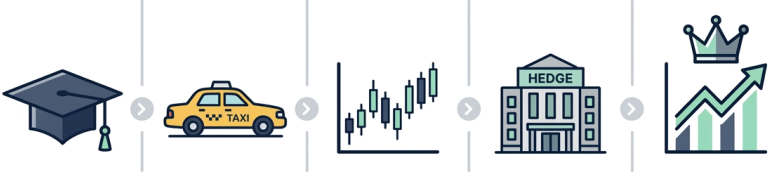
He went from driving a taxi in New York to becoming one of the most respected global macro traders of his generation. In 1983, he founded Caxton Associates, which eventually became one of the world's largest and most successful macro hedge funds.
According to Kovner's official biography, Caxton was built around trading financial and commodity markets based on macroeconomic views. During Kovner's 28 years as CEO, the firm reached roughly $12 billion in assets and achieved an average net annual return of more than 21%.
But Kovner's legacy is not simply about making money. His real contribution to trading was a philosophy center
ed on risk management, position sizing, discipline, and the willingness to admit when a trade is wrong.

From Harvard to a New York Taxi
Bruce Kovner was born in Brooklyn, New York, in 1945. His parents were children of Eastern European immigrants, and the family later moved to suburban Los Angeles, where Kovner attended public schools.
He eventually attended Harvard University, where he studied political economy and graduated in 1966.
His early career, however, did not follow a conventional path toward Wall Street.
Kovner spent years exploring politics, academia, writing and other intellectual pursuits. At one point, he drove a taxi in New York to support himself.
That period of uncertainty turned out to be an important part of his story. Rather than abandoning his intellectual interests, Kovner continued studying economics, politics, history and world affairs.
His ability to connect seemingly unrelated events would later become one of his greatest strengths as a trader.
The $3,000 Trade That Changed His Life
Kovner entered the financial markets in the 1970s.
One of his best-known early trading stories involved the soybean market in 1977.
He identified what he believed was a developing shortage and established a position in the soybean futures market. The trade initially moved dramatically in his favor.
But when the market reversed, Kovner experienced firsthand how quickly leverage could turn a profitable trade into a dangerous situation.
The experience became a defining lesson in risk management.
His later comments to Jack Schwager for Market Wizards make clear that the important lesson was not simply how much money he made or lost on that trade. It was the realization that a trader can be right about the market and still lose badly if the risk is poorly controlled.
That lesson stayed with him for the rest of his career.
The Birth of Caxton Associates
Kovner subsequently gained professional experience as a trader before establishing Caxton Associates in 1983.
The firm developed into a major global macro hedge fund.
Rather than focusing exclusively on individual companies, Kovner looked at the relationships between economies, governments and financial markets.
His investment universe included:
- Currencies
- Interest rates
- Government bonds
- Commodity futures
- Equity markets
- Other major financial instruments
The basic question was not simply:
"Which stock should I buy?"
It was closer to:
"What is changing in the global economy, and how will financial markets respond?"
This approach became the foundation of his global macro style.
What Is Bruce Kovner's Trading Strategy?
Kovner's approach cannot be reduced to one mechanical trading system.
Instead, several principles repeatedly appear in discussions of his trading philosophy.

1. Combine Fundamental and Technical Analysis
Kovner did not view fundamental and technical analysis as competing philosophies.
Fundamental analysis helped him develop a view of what might happen in the global economy.
Technical analysis helped him determine how the market was actually behaving.
This distinction is important.
A trader may believe that a currency should rise because of monetary policy or economic conditions. But if the market refuses to move higher, that price action is information.
Kovner used charts as a way of testing his market hypotheses rather than simply ignoring price behavior.
He famously compared technical analysis to taking a patient's temperature: fundamental analysis may explain the underlying condition, but the trader still needs to know what the market is doing right now.
2. Know Where You Are Wrong Before You Enter
Perhaps the most famous part of Kovner's philosophy is his approach to stop-losses.
His principle was straightforward:
Know where you will get out before you get in.
Before entering a trade, he determined the price level at which his original thesis would no longer make sense.
That level was not chosen simply because it represented a convenient percentage loss. He wanted the stop to be connected to the market's technical structure.
If the trade idea was correct, he believed the market should not cross that technical barrier.
This approach also influenced position sizing.
Instead of deciding how many contracts or shares to buy first and then placing a stop afterward, the stop and acceptable dollar risk helped determine the position size.
3. Undertrade Rather Than Overtrade
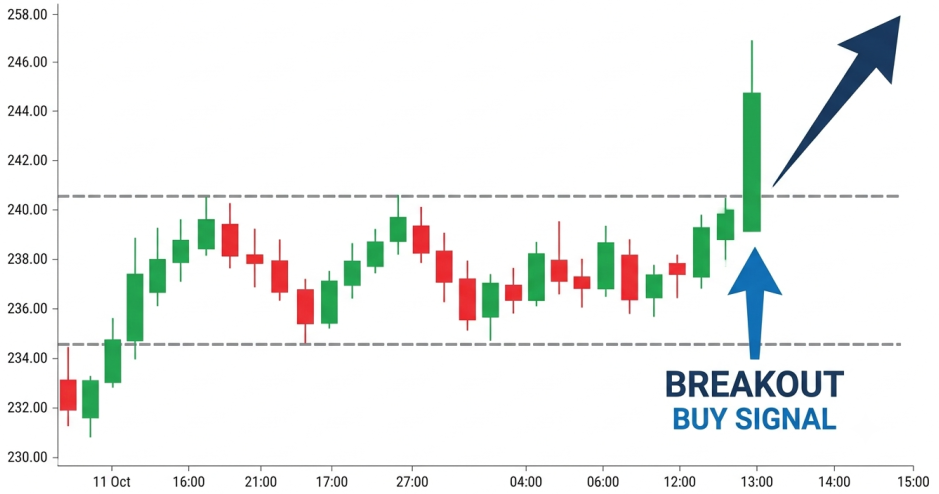
One of Kovner's most useful lessons for individual traders is surprisingly simple:
Trade smaller than you think you should.
In his Market Wizards interview, Kovner argued that many inexperienced traders take positions that are several times too large.
He discussed keeping risk on an individual trade around the 1–2% range, while emphasizing that the appropriate position size depends on the stop and the overall portfolio risk.
This should not be interpreted as a universal rule that every investor must risk exactly 1% or 2%.
The broader lesson is more important:
Position size should be determined by risk, not by confidence.
Feeling extremely confident about an idea is not a reason to bet your entire account on it.
4. Think About Correlation, Not Just Individual Trades
Another sophisticated aspect of Kovner's risk management was his attention to correlation.
Suppose a trader holds several different positions that all benefit from a weaker U.S. dollar.
They may appear to be separate trades, but economically they could represent one large macro bet.
Kovner pointed out that eight highly correlated positions can effectively behave like one position that is eight times larger.
This is an important lesson for modern investors.
Owning ten different stocks does not necessarily mean you have ten independent investments. If all ten depend on the same economic factor, the portfolio may be much less diversified than it appears.
The Bruce Kovner Trading Framework
Kovner's philosophy can be simplified into a practical framework:
| Step | Step |
| 1. Macro view | What major economic or political trend is developing? |
| 2. Market selection | Which asset is most sensitive to that trend? |
| 3. Price confirmation | Is the market actually confirming the thesis? |
| 4. Risk point | At what price is the trade clearly wrong? |
| 5. Position size | How much can I trade without taking excessive risk? |
| 6. Execution | Enter only when the setup is sufficiently clear. |
| 7. Review | If the evidence changes, change the position. |
The key is that risk management comes before position size. That is the reverse of how many inexperienced traders operate.
Bruce Kovner and the 1987 Stock Market Crash
The October 19, 1987 stock market crash, known as Black Monday, was one of the most dramatic events of the era.
The Dow Jones Industrial Average fell approximately 22.6% in a single day.
Kovner's experience during the crash became another important lesson in his approach to uncertainty.
Rather than assuming he understood everything that was happening, he recognized when market conditions had become difficult to interpret.
According to the Market Wizards interview, Kovner closed positions during October 19 and 20 because he believed something was happening that he did not understand.
That detail is particularly revealing.
The lesson was not simply "predict the crash."
It was: When you no longer understand the risk, reduce the risk.
That is a very different mindset from trying to prove that your original market forecast was correct.
The Psychology Behind Kovner's Success
Kovner believed that successful trading required more than intelligence.
A trader needed to remain rational while under pressure.
He emphasized the importance of imagining multiple possible scenarios rather than becoming emotionally attached to a single forecast.
Most scenarios will be wrong.
The objective is to keep testing different possibilities until the market provides enough evidence to support one of them.
This is particularly relevant in global macro trading because the relationships between interest rates, currencies, commodities and political events can change rapidly.
A good trader therefore needs to be flexible enough to change his mind.
The Most Important Lesson: The Market Is Not Your Enemy
One of Kovner's recurring themes was that traders should not personalize market losses.
The market does not know who you are.
It does not care whether you need a position to rise or whether you desperately want to recover yesterday's loss.
Once a trader starts thinking in terms of "I hope" or "I wish," attention shifts away from analyzing what the market is actually doing.
The better question is:
"What information is the market giving me now?"
That shift from emotion to diagnosis is at the heart of Kovner's philosophy.
Bruce Kovner's Key Trading Principles
His philosophy can be condensed into five practical rules.
1. Protect your downside first
A great trading idea is worthless if one position can destroy your capital.
2. Decide where you are wrong before entering
Never enter a trade without knowing what would invalidate the thesis.
3. Size positions according to risk
High conviction does not justify excessive leverage.
4. Watch the whole portfolio
Several correlated trades can create much more risk than the individual positions suggest.
5. Change your mind when the evidence changes
A losing trade is not necessarily a failure. Refusing to admit that the trade is wrong can turn a manageable loss into a catastrophic one.
Bruce Kovner's Life After Trading

Kovner eventually stepped away from the leadership of Caxton in 2011 after 28 years at the firm.
He later became chairman of CAM Capital, which manages his private investments, and continued his philanthropic activities through the Kovner Foundation.
His interests also extended well beyond finance.
He became deeply involved in music and education and served for many years as chairman of the board of The Juilliard School. His philanthropy included support for music education and important collections of musical manuscripts.
His post-trading career therefore reflected another side of his personality: the same intellectual curiosity that had once drawn him to economics and politics also extended into music, education and the arts.
Bruce Kovner's Legacy
Bruce Kovner's story is often presented as a dramatic journey from taxi driver to billionaire hedge fund manager.
That story is certainly compelling.
But his more enduring contribution to trading may be the discipline behind the numbers.
Kovner did not claim that traders could predict every market correctly.
Instead, his philosophy recognized that uncertainty is unavoidable.
The objective is to construct trades so that being wrong does not become fatal.
That means defining the risk before entering, keeping positions under control, considering correlations across the portfolio and remaining willing to abandon a thesis when the market contradicts it.
For individual investors, this may be more useful than trying to copy a professional macro trader's specific positions.
You do not need to trade currencies, futures or billions of dollars to apply the principle.
Before entering your next investment, ask yourself:
Where am I wrong?
How much can I lose if I am wrong?
Is my position small enough to survive that outcome?
And most importantly:
What will I do if the market does something I did not expect?
Those questions capture much of what made Bruce Kovner one of the most influential traders featured in Market Wizards.
His greatest lesson was not how to predict the future.
It was how to stay in the game when the future refuses to behave as expected.
Note: Historical performance figures and trading anecdotes about Bruce Kovner vary somewhat by source. The discussion above prioritizes information from Kovner's official biography and accounts of his interview with Jack Schwager. Past hedge fund performance should not be interpreted as a forecast of future investment returns.


