Most people who study the stock market focus on numbers: earnings reports, interest rates, price charts, trading volume. André Kostolany, one of Europe's most influential 20th-century investors, argued that something else drove markets far more reliably than any spreadsheet — the movement of money and the psychology of the people moving it.
Decades after his most active years in the markets, his ideas are still referenced by value investors, financial writers, and anyone trying to make sense of why prices swing so much further than the fundamentals seem to justify. Here's who he was, what he actually believed, and why his framework still holds up.
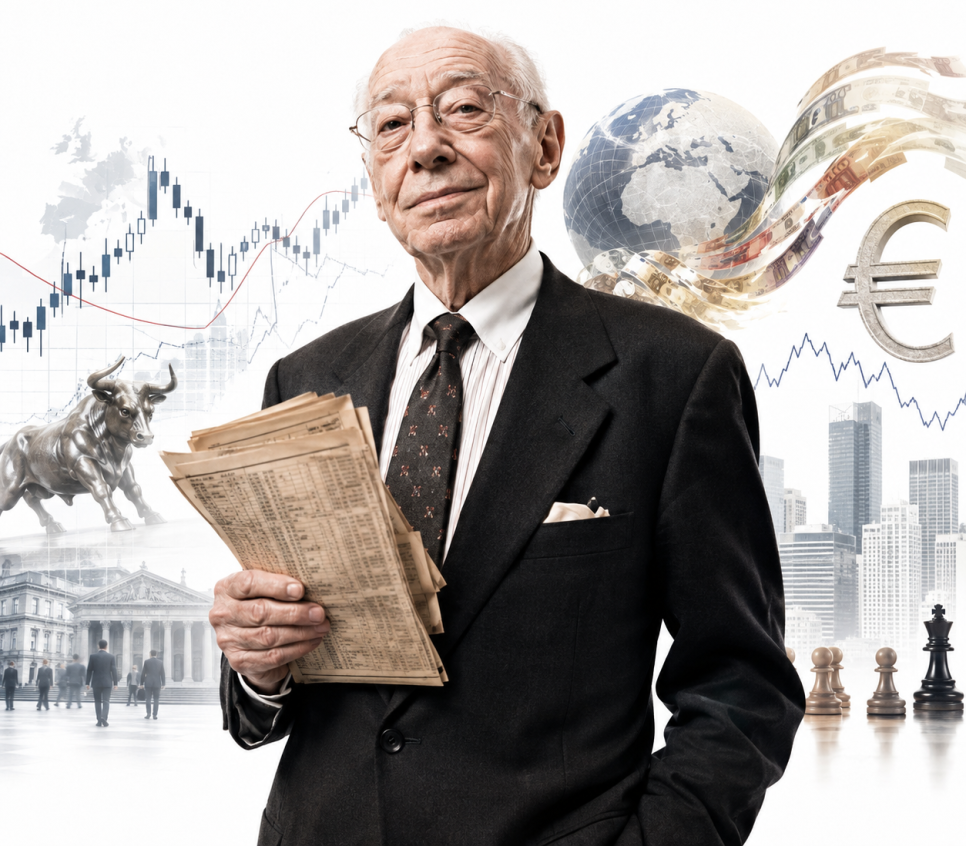
Who Was André Kostolany?
Born in Budapest, Hungary, in 1906, Kostolany didn't start out as a numbers person. He grew up with a strong interest in philosophy and the arts, and that humanities background shaped the way he later approached markets — less as a mathematical puzzle, more as a study of collective human behavior.
In his early twenties he moved to Paris, where he entered the securities business at a time when information traveled slowly and unevenly. There was no ticker on a phone screen, no real-time news feed. Investors had to infer what was happening by watching how other investors were behaving. That environment pushed Kostolany toward a conclusion he carried for the rest of his career: every price on a board represents a decision made by a person, and that person was driven by fear, hope, greed, or doubt — not just facts.
He went on to spend decades as an investor, financial columnist, and author across Europe, and his writing on market psychology remains widely read in German- and French-language financial literature.
The Contrarian Bet That Made Him Famous
The story most often told about Kostolany involves German bonds after World War II. In the war's aftermath, Germany's economy and credit standing were in ruins, and most investors treated German government debt as close to worthless.
Kostolany took the opposite view. His reasoning wasn't based on inside information — it was based on a forward-looking judgment: if Germany was ever going to rebuild its economy and re-enter international financial markets, it would eventually need to restore trust by addressing its old debts. Acting on that belief, he is widely reported to have bought deeply discounted German bonds well before that recovery was visible to the broader market.
When West Germany's postwar economic recovery (the "Wirtschaftswunder") took hold, the value of those bonds rose sharply. Some accounts of this story cite extraordinary returns — figures as high as several thousand percent are often repeated — though the exact numbers vary between sources and should be treated as illustrative rather than verified fact.
What matters isn't the precise return. It's the mechanism: Kostolany was pricing in a future that hadn't happened yet, at a moment when almost everyone else was only pricing in the present.
Why Money Flow Matters More Than Most Investors Realize
A central piece of Kostolany's framework is what he called the flow of money — not cash sitting in a bank account, but capital moving between asset classes: savings deposits, bonds, and stocks.
When interest rates rise, savers can earn a decent return without taking on risk, so money tends to stay in deposits and bonds rather than flow into equities. When rates fall, the opposite happens — savings and bonds become less attractive, and capital starts hunting for higher returns in riskier assets like stocks.
This isn't a mechanical rule. Low rates don't guarantee rising stock prices; if the underlying economy is deteriorating badly enough, investors can avoid risk assets even when borrowing is cheap. Kostolany's point was that you have to trace the whole chain of cause and effect:
Interest rates → capital movement → investor behavior → market sentiment → stock prices
Skipping straight from "rates went down" to "stocks will rise" misses several steps where the story can break down.
How Money Flow Shapes Crowd Psychology
Kostolany also mapped out how sentiment evolves as money moves. When a rally begins, early gains are met with skepticism — "this won't last." As prices keep climbing and more people start making money, doubt turns into curiosity, then optimism, and eventually greed, as latecomers pile in near the top.
Declines follow a mirror pattern. Falling prices are first met with patience, then discomfort as losses grow, then anxiety, and finally panic — the point at which investors sell simply because everyone around them is selling, regardless of what the underlying business is actually worth.
Understanding this cycle doesn't let you predict the market. What it does is help you recognize which phase you're standing in — and ask whether your own decisions are being driven by analysis or by the crowd around you.
The Owner and the Dog: Kostolany's Most Famous Analogy
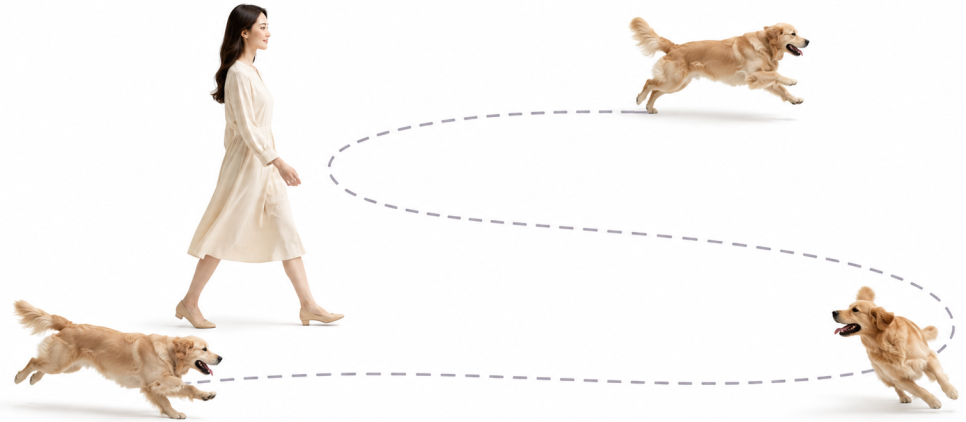
Kostolany's best-known metaphor compares a company's underlying value to a man walking his dog. The owner moves steadily down the street. The dog runs ahead, doubles back, wanders off, and sometimes lags behind — but over the course of the walk, it never strays too far from its owner.
The owner represents a company's real economic value: its earnings, its competitive position, its long-term prospects. The dog represents the stock price. In the short run, the price can run far ahead of the fundamentals when optimism takes over, or fall far behind when fear dominates. But over a long enough time horizon, price tends to move back in line with value.
The practical takeaway: watching the dog's every move — daily price swings — tells you very little. Watching where the owner is actually headed tells you much more.
Two Types of Investors: Which One Are You?
Kostolany divided market participants into two broad categories — investors who act on their own analysis, and those who simply follow the crowd.
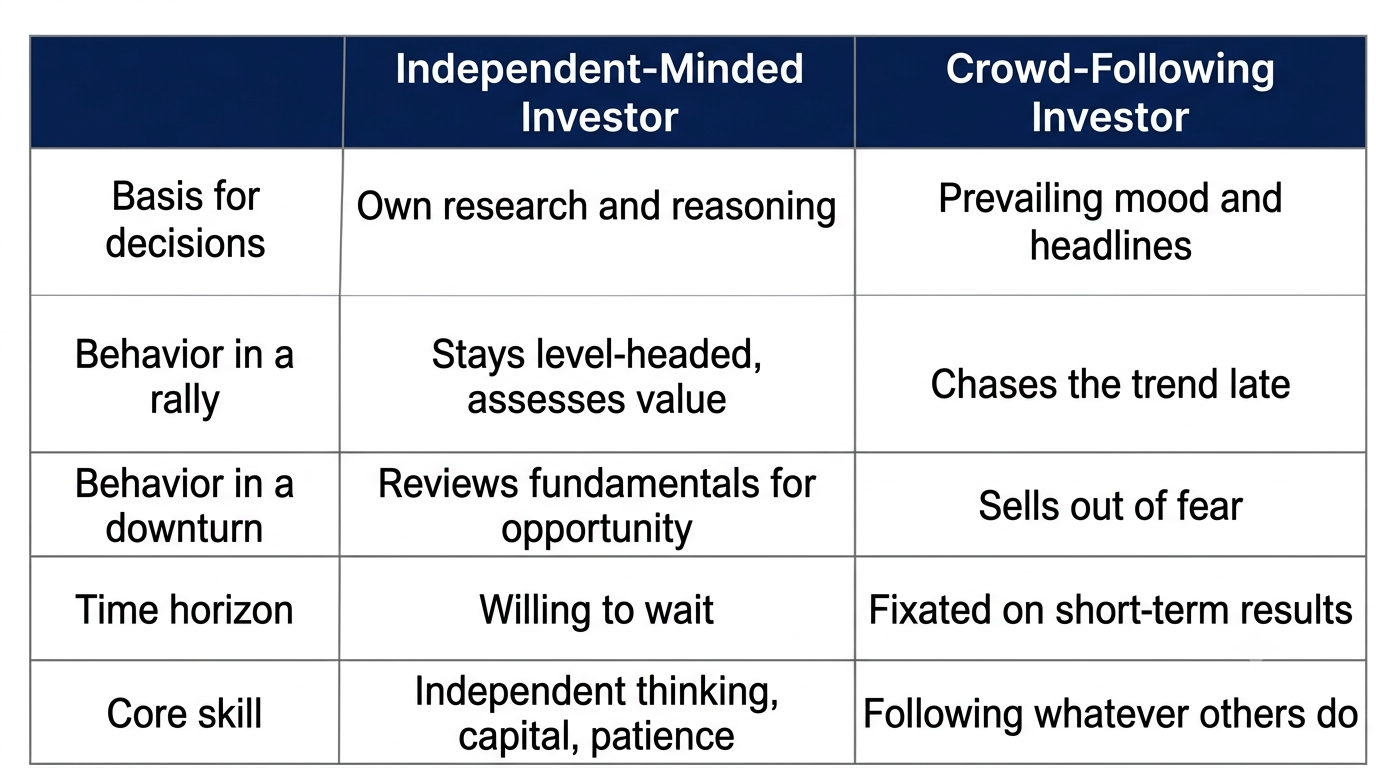
The independent investor doesn't buy just because everyone else is buying, and doesn't sell just because everyone else is panicking. The deciding factor is the gap between their own estimate of value and the current market price. Patience is the hard part — being right early can look identical to being wrong, sometimes for a long time.
Kostolany's Egg Theory: Mapping the Market Cycle
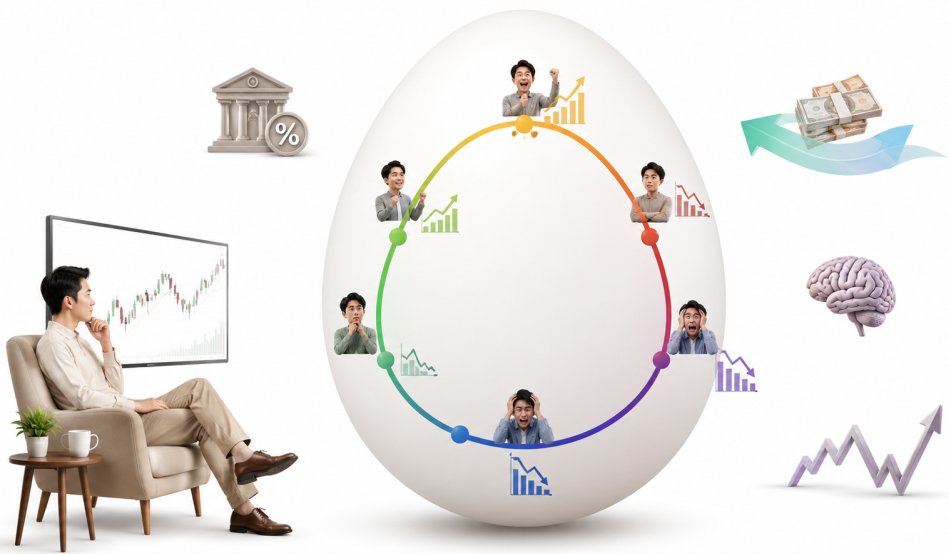
One of Kostolany's most practical tools is what's often called Kostolany's Egg — a visual model showing that markets move through recurring, roughly cyclical phases rather than trending endlessly in one direction: depression, recovery, boom, overheating, downturn, panic, and back to depression.

The egg isn't a trading signal system — it's not "buy exactly here, sell exactly there." Its real value is in helping investors notice how far sentiment can swing between the moment nobody wants to talk about stocks and the moment everyone does, and to use that awareness to check their own emotional state against the crowd's.
The Underrated Power of Doing Nothing
Today's investors have access to far more information than Kostolany ever did — real-time prices, constant news alerts, an endless stream of commentary on every 1% move. More information sounds like an advantage, but it often makes investors more reactive, not less, prompting decisions based on noise rather than a change in the underlying facts.
Kostolany's framework offers a simple filter for this: when a price moves, ask whether the reason you originally bought the asset has actually changed, or whether it's only the price that moved. If the business fundamentals and your original reasoning are intact, a short-term price swing usually isn't a reason to act.
In this sense, patience isn't passivity. It's an active decision — continuing to test your own judgment against new information while refusing to act until the evidence actually calls for it.
What Kostolany's Ideas Still Offer Investors Today
Kostolany's philosophy doesn't reduce to a single stock-picking formula. It's a way of connecting several forces — capital flow, interest rates, crowd psychology, the gap between price and value, and time — into one coherent picture.
Money moves, and investor behavior shifts in response. Behavior shifts, and market sentiment changes with it. When sentiment swings to an extreme, prices can drift far from what a business is actually worth. Given enough time, markets tend to correct back toward a more reasonable balance.
His deeper lesson isn't that contrarian behavior is automatically right — blindly selling into optimism or buying into panic isn't a strategy either. The real point is having a reasoned basis for thinking differently from the crowd: understanding where capital is flowing, why people are buying or selling, and how far the current price has drifted from underlying value.
Markets today are far more complex than the ones Kostolany navigated — algorithmic trading, ETFs, global capital flows, and central bank policy all add layers he never had to account for. Even so, his core habits — tracking where money is moving, reading crowd psychology honestly, and waiting for the gap between price and value to close — remain a useful discipline.
Perhaps his most enduring question for investors isn't "which stock should I buy?" but this one: when everyone else is either euphoric or terrified, how clearly can you actually think?


