Inflation hasn't fully cooled off, and geopolitical tension keeps flaring up in the Middle East and Eastern Europe. That's pushed a growing number of investors to look beyond stocks and bonds toward commodities. But unlike buying a share of Apple or an S&P 500 fund, commodity investing runs on a completely different set of rules.
There's no balance sheet to check, no earnings call to follow. Instead, prices move on weather patterns, central bank decisions, and shipping routes. And once you step into futures trading, you'll run into a concept stocks never require: margin. Here's what you actually need to know before putting money into commodities, from the major sectors to how ETFs and futures compare, plus the risks that catch new investors off guard.

Commodities Aren't One Asset Class — They're Four
Lumping "commodities" together as a single trade is a mistake. Each sector responds to a different set of drivers, and knowing which one matters for your position is half the battle.
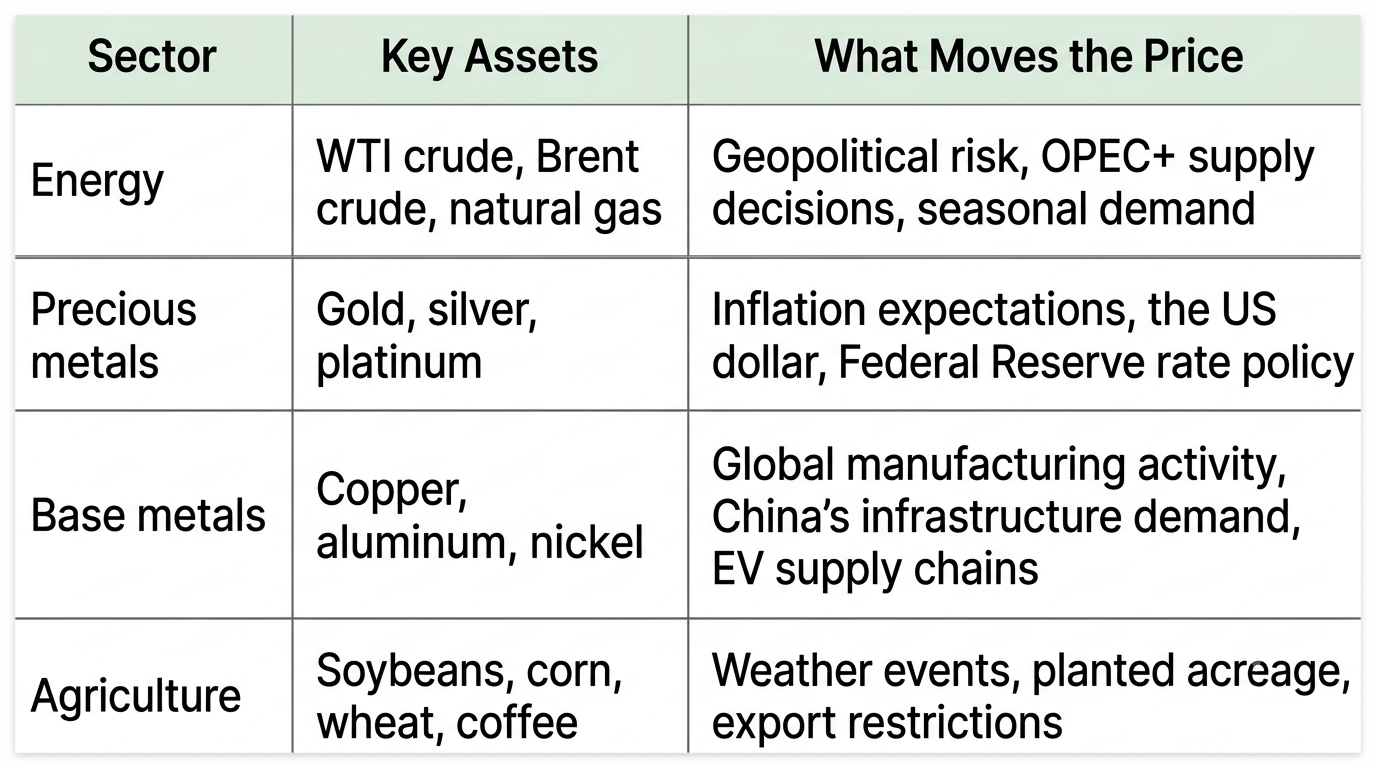
Copper deserves a special mention here. Traders nickname it "Dr. Copper" because it's often used as an early read on the health of the global economy — when factories ramp up, copper demand tends to rise first. Precious metals work almost in reverse: they typically move opposite the dollar and interest rates, which is exactly why investors hold gold as a hedge rather than a growth play.
ETFs or Futures: Which One Actually Fits You?
Most retail investors access commodities one of two ways: through an ETF or ETN in a regular brokerage account, or by opening a futures account and trading contracts directly.
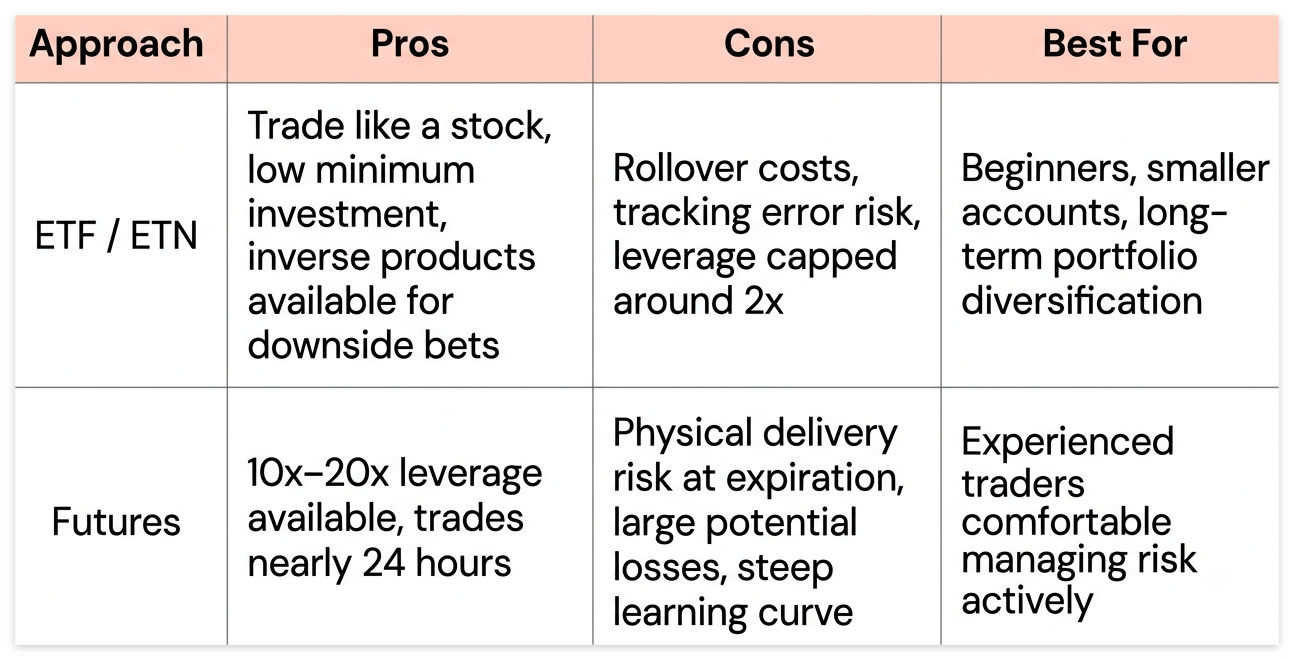
If you're new to commodities, starting with an ETF or ETN through a regular brokerage account is the more forgiving path. Futures make sense once you understand margin requirements and can stomach the swings that come with leverage.
Why Futures Require Margin — and What Happens If You Ignore It
An ETF share might cost you $10 to $50. Futures work differently: you're trading a contract, and that contract requires margin, a good-faith deposit that guarantees you'll meet your obligations.
There are two figures to know. Initial margin is what you need to open the position. Maintenance margin is the minimum balance you must keep in your account afterward. If your account drops below maintenance margin, your broker issues a margin call — and if you don't add funds in time, they'll liquidate the position for you.
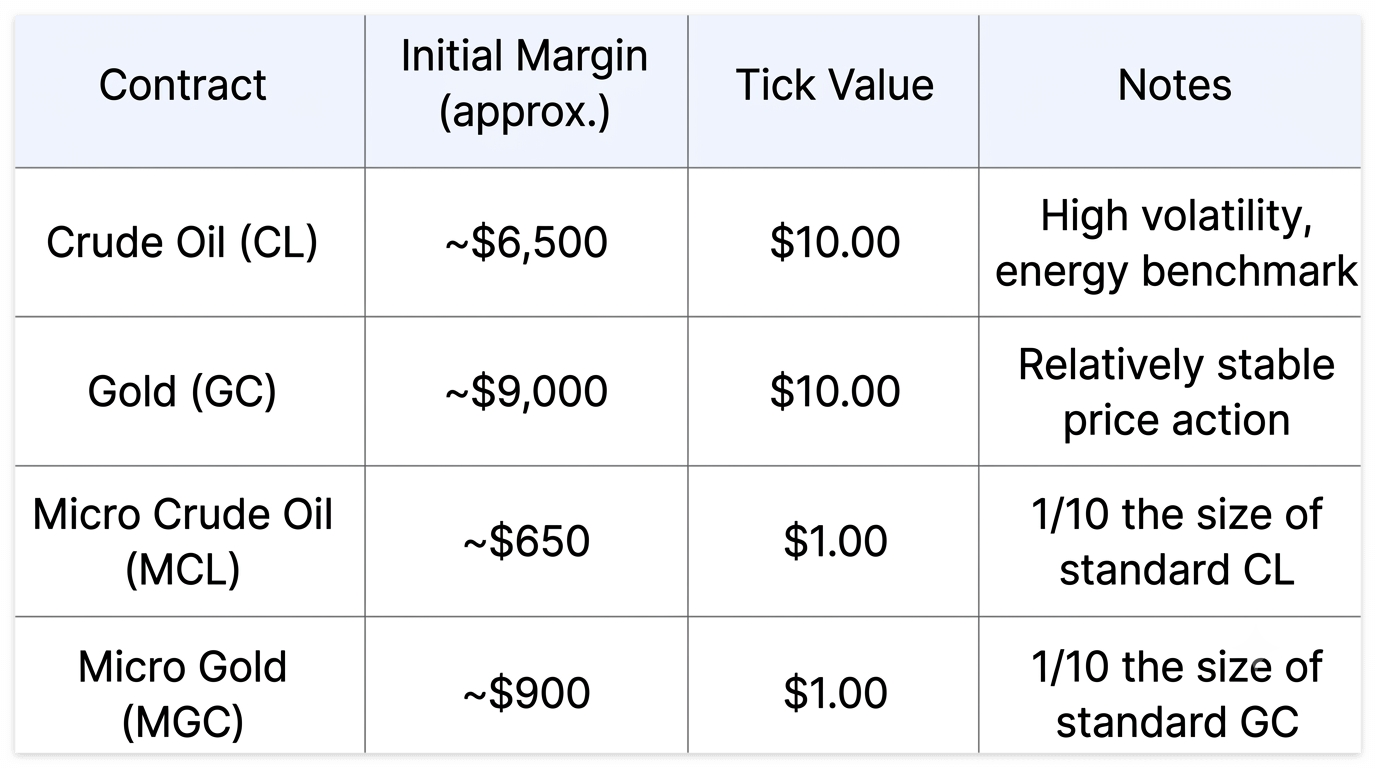
Margin requirements shift with market volatility, so always check current figures with your broker before placing a trade.
Full-size contracts require thousands of dollars in margin, which puts them out of reach for a lot of beginner traders. Micro contracts solve that problem — they cut both the margin requirement and the tick value down to roughly a tenth, so you can open a position with around $500 to $1,000 and get a feel for how futures actually behave.
The Risks That Catch New Commodity Investors Off Guard
Because commodities don't come with financial statements, the risks you need to track look completely different from stock investing.
- Rollover cost: Futures contracts expire, so holding a position long-term means repeatedly rolling into the next contract month. When later-dated contracts cost more than near-term ones — a state called contango — that cost quietly eats into your returns every time you roll. This is one reason commodity ETFs tend to work better for shorter-term positioning than buy-and-hold investing.
- Geopolitical shocks: A conflict or export ban can disrupt supply overnight and send prices swinging in either direction. Keep an eye on the news and set a stop-loss before you need one.
- Currency risk: Most global commodities are priced in US dollars. If the commodity rallies but your home currency strengthens against the dollar, you can still end up with a loss after conversion.
- ETN tracking gaps: Exchange-traded notes can trade at a price that drifts from their actual indicative value. When that gap gets too wide, the issuer may halt trading or force an early redemption — so it's worth checking a fund's premium or discount before buying in.
Sector-specific quirks matter too. Natural gas has earned the nickname "widow maker" for swinging 10–20% in a single day, which makes oversized leverage especially dangerous there. Agricultural commodities can reverse just as fast — a drought headline can send prices up one day and a surprise rain forecast can erase the move the next, so smaller position sizes make sense. Gold and other precious metals are calmer by comparison, but they don't pay dividends or interest, so holding them becomes more expensive in relative terms when interest rates are high.
Commodities can be a useful hedge against inflation, but the leverage and volatility involved mean they work best as a smaller slice of a portfolio — many investors start with 5-10% allocated to a broad commodity ETF before considering anything more complex.
This article is for informational purposes only and does not constitute investment advice. Always do your own research before investing.


