Why Agricultural Commodities Deserve a Closer Look
Grocery prices have been climbing for years now, and most of that pressure traces back to the same handful of crops: corn, soybeans, and wheat. Unlike gold or oil, agricultural commodities sit at the intersection of weather, geopolitics, and something everyone needs regardless of income level — food.
That combination makes this market genuinely different from other commodity classes. It's also why more retail investors are starting to ask how they can actually get exposure to it. This guide walks through the main ways to invest, the mechanics of futures trading (margin requirements, trading hours), and the risks worth understanding before you commit capital.

Grains vs. Softs: Two Different Market Personalities
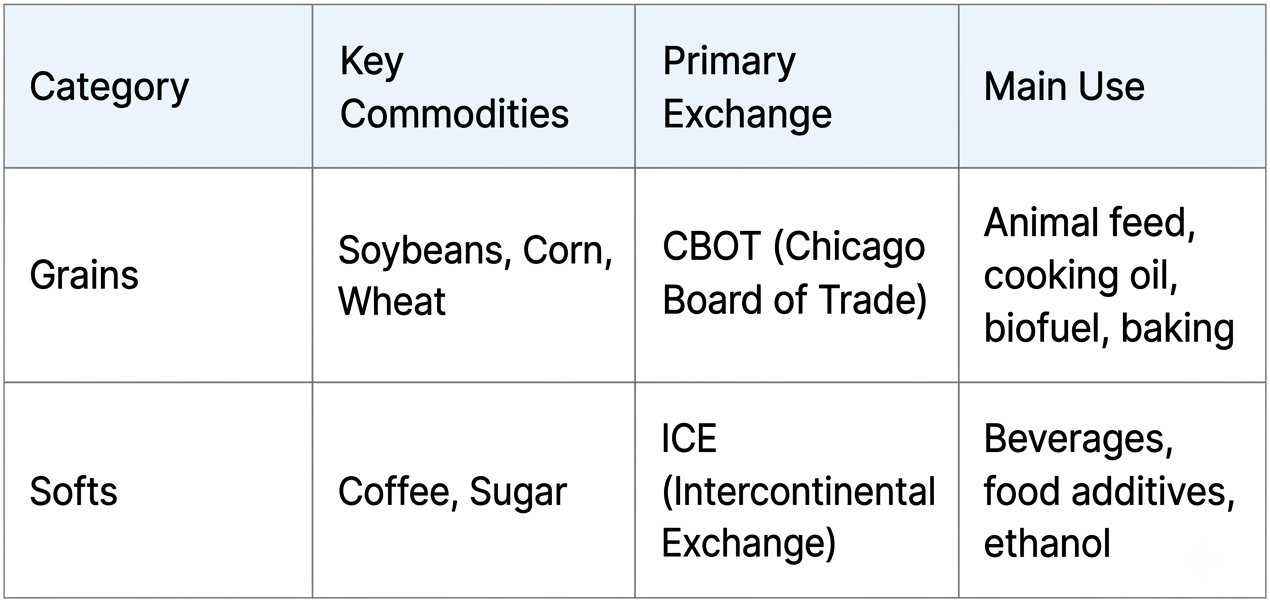
Agricultural commodities generally split into two categories, and each behaves differently.
Grains include corn, soybeans, and wheat — the three crops that dominate global food security and animal feed. Prices here tend to move on macro supply-demand shifts and planting-season expectations.
Softs cover coffee, sugar, cocoa, and cotton. These are more exposed to consumer demand swings and regional weather shocks, which tends to make them noticeably more volatile than grains.
Three Ways to Get Exposure
There's no single "correct" way to invest in agricultural commodities — the right approach depends on how much risk you're comfortable with and how hands-on you want to be.
Direct futures contracts. This means opening a futures account and trading CBOT or ICE contracts directly. It offers leverage and the ability to go long or short, but it also demands active monitoring and a solid understanding of margin requirements. This route suits traders who already have some derivatives experience.
Agricultural ETFs. For most retail investors, this is the more practical entry point. Funds like DBA (Invesco DB Agriculture Fund) bundle exposure across multiple crops into a single ticker you can buy through a regular brokerage account, no futures account required.
Agribusiness stocks. Instead of betting on crop prices directly, you invest in the companies that supply and process them — seed producers, fertilizer manufacturers, equipment makers, and grain traders. Deere & Company, Corteva, and Archer-Daniels-Midland are common examples. This approach ties your returns partly to company execution, not just commodity prices.
Understanding Margin Before You Trade Futures
If direct futures trading is on the table, margin is the concept to get comfortable with first. Instead of paying the full contract value, you post a margin — a good-faith deposit that guarantees you'll fulfill the contract. This is what creates leverage: a relatively small deposit controls a much larger position.
There are two margin thresholds to know. Initial margin is what you need to open a position. Maintenance margin is the minimum balance your account must hold to keep that position open — if your account falls below it, you'll face a margin call and may be forced to close the position at a loss.
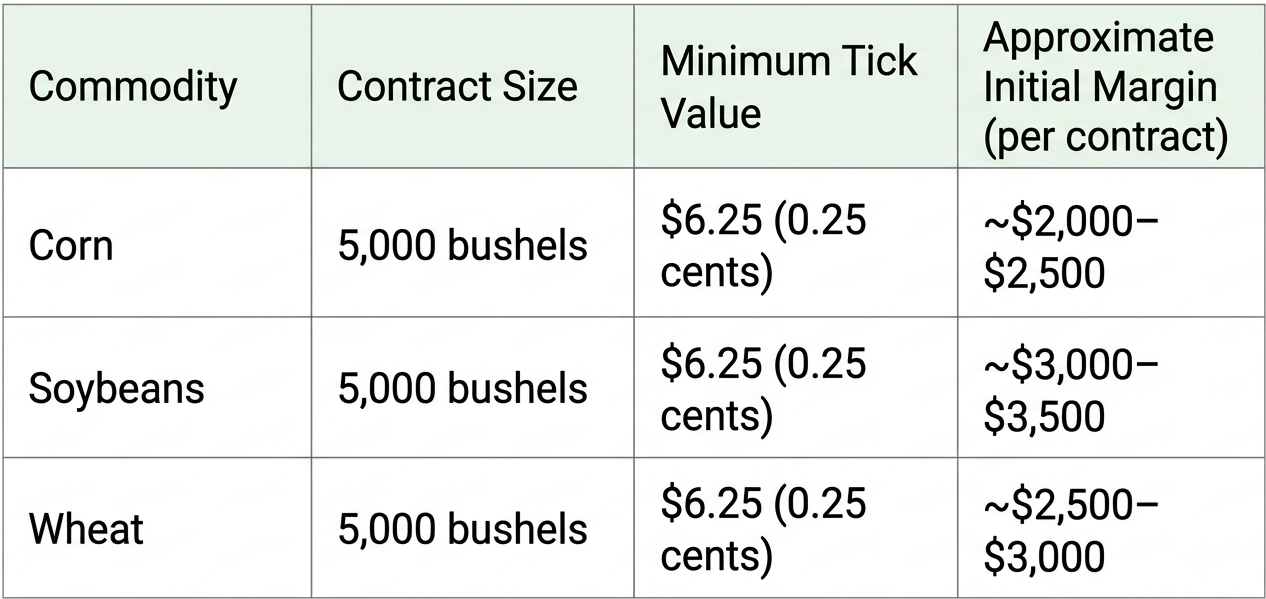
These figures shift with exchange volatility settings, so always check current requirements with your broker before placing an order rather than relying on numbers you saw elsewhere.
Trading Hours Have a Gap You Need to Know About
Unlike index futures, which trade nearly around the clock, CBOT grain futures include a scheduled break each session. Missing this detail is a common mistake for first-time traders.
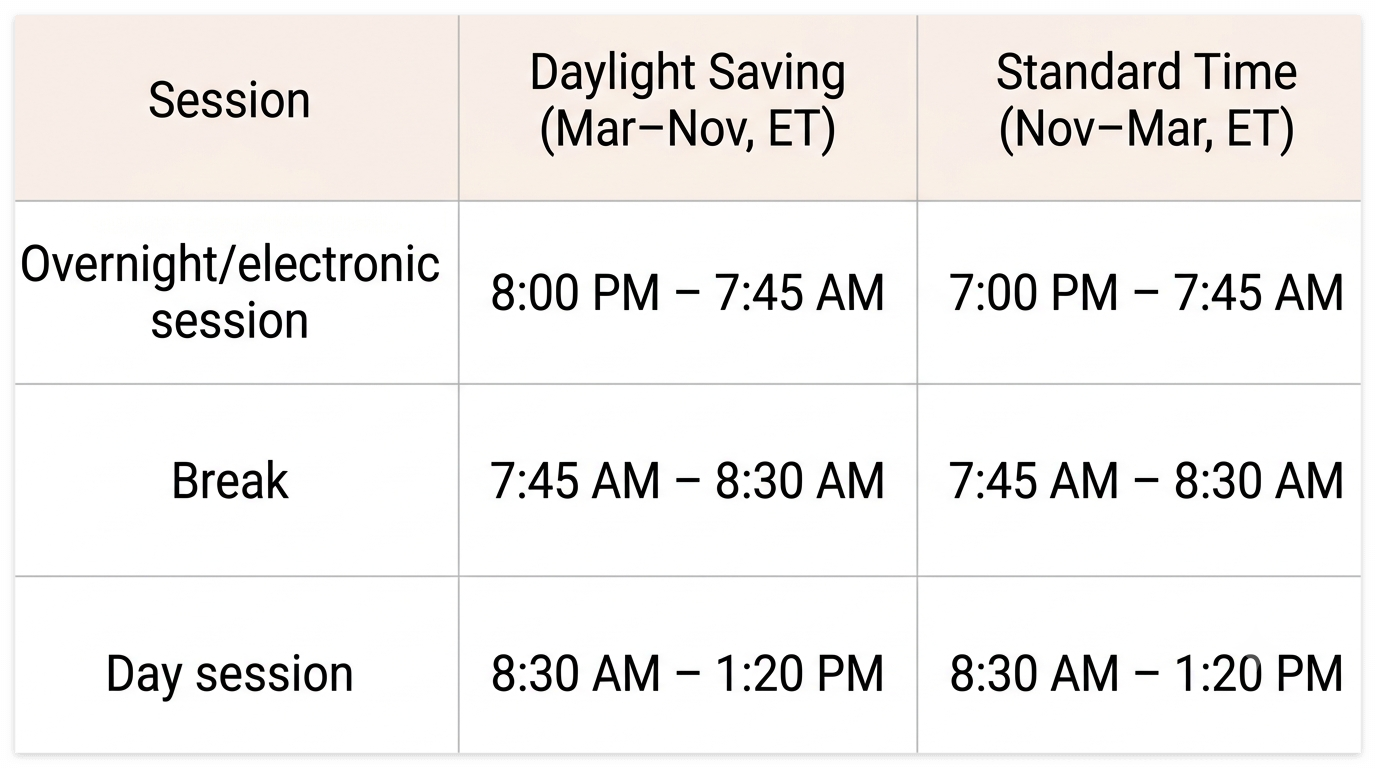
(Times are approximate and based on CBOT's published schedule — always verify against your exchange's current calendar, since holiday sessions and rule changes do occur.)
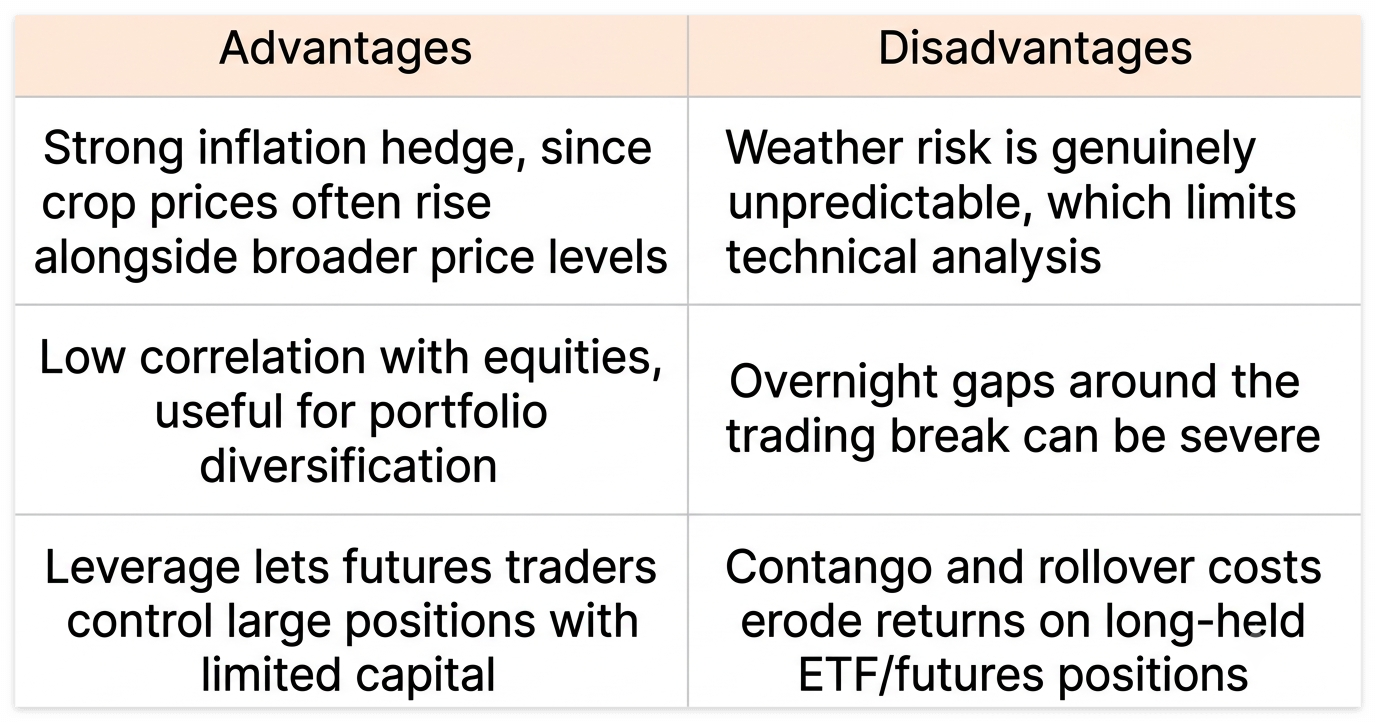
The practical takeaway: prices can gap sharply when the day session reopens, especially if news broke during the break. If you're holding a position overnight, factor that gap risk into your stop-loss planning.
What Makes Agricultural Commodities Behave Differently
Three characteristics set this asset class apart from metals or energy.
Seasonality is built in. Planting, growing, and harvest seasons create a predictable rhythm — prices often soften during harvest when supply floods the market, then firm up ahead of planting when inventory concerns resurface.
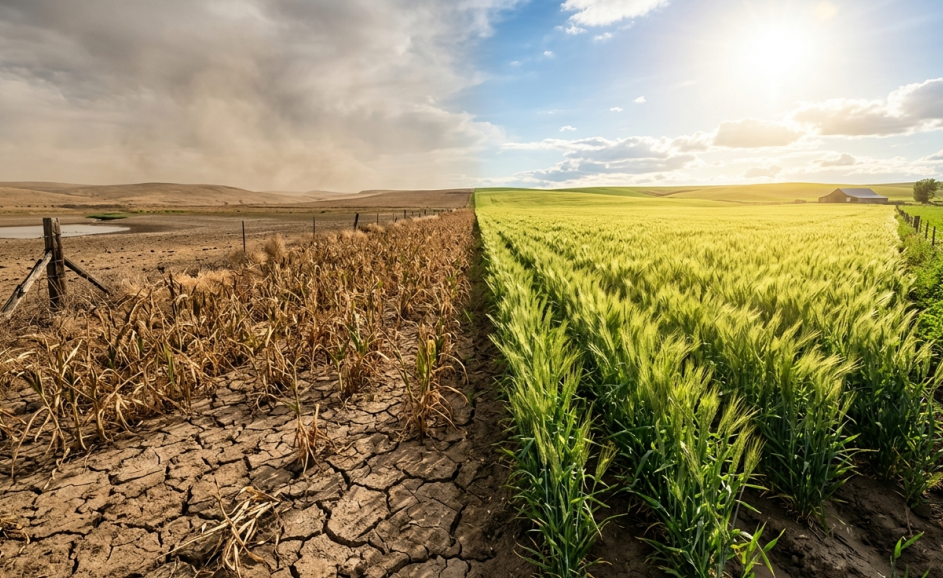
Weather is the dominant variable. A drought in Iowa or flooding in Brazil can move prices overnight in ways no chart pattern predicts. This is arguably the single hardest risk to hedge against with technical analysis alone.
Demand barely bends. Food is inelastic — people don't stop eating when prices rise. That inelasticity means price spikes can overshoot far beyond what supply-demand fundamentals alone would suggest.
Weighing the Pros and Cons
Three Things to Check Before You Commit Capital
Watch for contango. Agricultural futures and the ETFs that track them have expiration dates. When the next month's contract trades higher than the current one — a condition called contango — rolling positions forward each month quietly erodes returns over time. This is one reason agricultural exposure tends to work better as a shorter-term, momentum-driven position rather than a buy-and-hold allocation.
Mark WASDE report dates on your calendar. The USDA's monthly World Agricultural Supply and Demand Estimates report is one of the biggest market-moving events in this space. Prices can hit daily limits immediately after release. If you're new to the market, closing positions ahead of the report rather than holding through it is the safer approach.
Treat leverage with real caution. A single inaccurate weather forecast can trigger a margin call on a leveraged futures position. Size positions according to what you can afford to lose, and set stop-loss levels before you enter — not after the trade starts moving against you.
Choosing the Right Entry Point
If you're weighing futures against ETFs against agribusiness stocks, the decision usually comes down to two questions: how much time can you spend monitoring the position, and how much volatility can you tolerate without losing sleep. Investors who can't watch markets daily are generally better served starting with an ETF or an agribusiness stock. Those comfortable managing margin and reacting quickly to weather news may find direct futures worth the added complexity.
Starting small with an ETF like DBA, or with a well-established agribusiness stock, gives you exposure to this market's unique dynamics without the operational demands of a futures account — a reasonable way to build familiarity before scaling up.


